
Your EOS implementation brought you a game-changing concept: the Visionary/Integrator duo. The Visionary drives vision and culture. The Integrator harmonizes the team and executes the plan. It's powerful when it works.
And then your Integrator takes another opportunity. Or burns out. Or the company outgrows what one person can harmonize.
Now what?
The Visionary/Integrator model is brilliant for a certain stage of company. But it has a built-in risk: critical dependency on one person. If your execution capacity lives primarily in one Integrator, you have a single point of failure for your entire operating system.
The Integrator Dependency Risk
The EOS Integrator role is demanding. They:
- Harmonize the leadership team
- Run the L10 and keep people accountable
- Manage the day-to-day operations
- Resolve conflicts and remove obstacles
- Execute the plan
It's essentially a COO who also serves as team psychologist, meeting facilitator, and execution engine. When you have a great one, everything works. When you don't...
The Single Point of Failure Problem
Consider what happens when an Integrator leaves:
Week 1: L10 feels different. Issues pile up. Decisions slow down. Month 1: Rocks falling behind. Team friction increasing. Visionary getting pulled into operations. Month 3: Either a new Integrator is found, or the Visionary is drowning in operational details.
The math: If it takes 6 months to find and onboard a replacement Integrator, and productivity drops 30% during that time, a $10M company loses approximately $500K in execution capacity. Plus the search costs, signing bonus, and learning curve.
The Scaling Ceiling
Even with a great Integrator, the model has limits:
10-person company: One Integrator can harmonize the whole leadership team 50-person company: Integrator is stretched but managing 200-person company: One person cannot effectively harmonize an organization this size
At some point, you need leadership capacity distributed throughout the organization, not concentrated in one role.
Integrator as Crutch
In some companies, the Integrator becomes a crutch that prevents others from developing:
- Department heads defer to the Integrator instead of solving cross-functional issues themselves
- Leaders don't develop conflict resolution skills because the Integrator handles it
- The team becomes dependent on the Integrator's facilitation to function
This works until it doesn't.
What Distributed Leadership Actually Is
Resolute Leadership is about building leadership capacity at every level - not replacing the Integrator, but ensuring leadership isn't bottlenecked in one person.
The fundamental shift:
- Integrator Model: "One person harmonizes the team"
- Distributed Leadership: "Leadership capacity exists throughout the organization"
Think of it this way: The Integrator model is like having one air traffic controller managing all flights. Distributed leadership is like having trained pilots in every cockpit who can navigate themselves, coordinating through clear protocols. Both need coordination, but one scales and one doesn't.
The Waymaker Leadership Curve: Building Capacity at Every Level
The Waymaker Leadership Curve provides a framework for developing leadership capacity across the organization, not just at the top.
The Six Stages of Leadership Maturity
Organizations - and teams within them - progress through predictable stages:
Stage 1: Idea - Founder/leader-led, everything flows through one person Stage 2: Identity - Beginning to establish structure and systems Stage 3: Calibration - Finding the right balance of people, skills, systems Stage 4: Maturity - Consistent execution with established rhythms Stage 5: Mastery - Market leadership, continuous improvement Stage 6: Initiate - Starting the next growth curve
The Integrator model works well in Stages 1-3. Beyond that, you need distributed leadership.
Skills and Systems Development
At each stage, leaders need both:
Skills (above the line): Capabilities that people develop
- Strategic thinking
- Team leadership
- Decision-making
- Conflict resolution
- Communication
Systems (below the line): Structures that enable consistency
- Meeting rhythms
- Decision frameworks
- Communication protocols
- Accountability systems
- Planning processes
The Integrator often holds both the skills AND manages the systems. Distributed leadership develops skills in many people and systematizes what can be systematized.
From Hero to System
Hero leadership: Success depends on exceptional individuals Systematic leadership: Success depends on good people in well-designed systems
Your Integrator might be a hero. The goal is to extract what makes them effective into:
- Learnable skills that others can develop
- Documented systems that others can follow
- Clear frameworks that enable good decisions
Then you're not dependent on finding another hero.
Practical Integration: Keep Your Integrator, Build Capacity Around Them
You don't need to eliminate the Integrator role. You need to reduce dependency while building broader capacity.
Step 1: Identify What the Integrator Actually Does
List everything your Integrator handles:
- Running L10 meetings
- Resolving team conflicts
- Managing accountability
- Coordinating departments
- Handling escalations
- Executing special projects
Now ask: Which of these could others learn to do?
Step 2: Develop Leadership in Department Heads
Department heads should be able to:
- Run effective meetings for their teams
- Resolve conflicts within their departments
- Hold their teams accountable without escalation
- Coordinate with other departments directly
Training investment: Each department head developing these skills reduces load on the Integrator and builds organizational resilience.
Step 3: Systematize What Can Be Systematized
Some Integrator functions can become systems:
| Integrator Function | Systematic Alternative |
|---|---|
| Running L10 | Trained facilitators, rotating role |
| Accountability tracking | Dashboard with clear metrics |
| Conflict resolution | Defined escalation process |
| Cross-department coordination | Regular sync meetings with clear owners |
| Decision-making | Decision rights framework (who decides what) |
Not everything can be systematized. But much can.
Step 4: Build Decision Rights Clarity
One reason teams depend on Integrators: unclear who has authority to decide what.
Create a decision rights matrix:
- What decisions can each role make autonomously?
- What requires consultation?
- What requires approval?
- What goes to leadership team?
When decision rights are clear, people don't wait for the Integrator to decide.
Step 5: Develop Resolute Leaders, Not Just Managers
The Resolute leadership model emphasizes:
Character and Values (the constant):
- Integrity and trust
- Service orientation
- Commitment to team success
Skills and Systems (the adaptive):
- Learnable capabilities
- Documented processes
- Clear frameworks
Develop leaders who embody values AND can execute systems. Don't choose between character and competence.
The Complete Picture: EOS + Resolute Integration
The Integrator model and Distributed Leadership work together:
| Aspect | EOS Integrator | Resolute Distributed Leadership |
|---|---|---|
| Focus | One person harmonizes | Many leaders capable |
| Risk | Single point of failure | Resilience through redundancy |
| Scale | Works to ~100 people | Scales beyond |
| Development | Find great Integrator | Develop many leaders |
| Dependency | High on one person | Distributed across team |
EOS gives you the Visionary/Integrator concept. Resolute gives you leadership development at every level.
Why This Matters for EOS Companies
If you have a great Integrator, you know how valuable they are. That's exactly why you should build redundancy.
Resolute builds on that foundation. Distributed leadership doesn't eliminate the Integrator - it makes the organization less fragile:
- EOS gives you Visionary/Integrator duo → Resolute adds leadership capacity throughout
- EOS gives you Integrator accountability → Resolute adds decision rights clarity
- EOS gives you L10 facilitation → Resolute adds facilitation skills for all leaders
The next evolution is from "dependent on one person" to "leadership capacity everywhere." That's where Resolute's leadership frameworks and Waymaker's development tools complete the picture.
We're not replacing your Integrator. We're ensuring your organization can thrive regardless of any single person.
Read more about the 7 Questions of Leadership and discover how talent architecture develops leadership capacity.
Experience Leadership Development with Waymaker
Ready to build leadership capacity throughout your organization? Waymaker provides the frameworks and tools to develop leaders at every level.
Commander: Leadership Development Home
Waymaker Commander gives you the frameworks for leadership development - role descriptions with leadership expectations, goal canvases with development targets, meeting structures that develop facilitation skills.
The Leadership Curve Assessment
Use the Waymaker Leadership Curve to assess where each team is in their development journey. Identify the skills and systems needed at each stage.
OneAI: Leadership Intelligence
Ask questions like "Which department heads are ready for expanded decision rights?" or "Where are we still dependent on single individuals?" - and get insight into your leadership capacity.
Resolute Teams Frameworks
Access the Resolute Teams frameworks designed specifically for building team-level leadership capacity - the Eight Traits, team-specific Leadership Curves, and Team Canvases.
Keep your Integrator. Build leadership everywhere. That's how you go from dependent to resilient.
The Integrator is valuable. Distributed leadership is resilient. Build both. Learn more about Resolute vs Charismatic Leadership and explore the 7 Questions framework.
EOS® and Entrepreneurial Operating System® are registered trademarks of EOS Worldwide, LLC. Waymaker is not affiliated with, endorsed by, or sponsored by EOS Worldwide.
About the Author
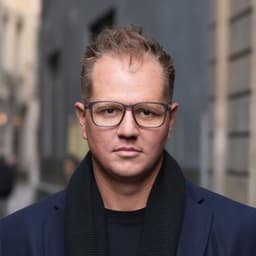
Stuart Leo
Stuart Leo founded Waymaker to solve a problem he kept seeing: businesses losing critical knowledge as they grow. He wrote Resolute to help leaders navigate change, lead with purpose, and build indestructible organizations. When he's not building software, he's enjoying the sand, surf, and open spaces of Australia.