
Your best engineer just quit. Not because of salary—you pay market rate. Not because of the work—the projects are interesting. She quit because "there's no clear direction" and "we keep changing priorities without explanation." Meanwhile, your operations manager is frustrated because the team won't follow the new process he implemented. "They need to just execute," he says. "We have systems for a reason."
Two problems. Same root cause: confusing leadership with management.
Most organizations treat these words as synonyms. "We need better leadership" becomes "implement more process." "We need stronger management" becomes "inspire the team with vision." The result? Burnout, confusion, and the exact chaos both interventions were meant to solve. According to research from Gallup on employee engagement, organizations that fail to distinguish between leadership and management experience 67% lower engagement and 2.5x higher turnover.
The Waymaker Leadership Curve makes the distinction crystal clear: Lead people through character and values. Manage things through skills and systems. Get this right, and you create positive tension that drives both execution and innovation. Get it wrong, and you'll micromanage your way to mediocrity or vision your way into chaos.
The Problem: When Leaders Manage and Managers Lead
Here's how the confusion plays out in real organizations:
Scenario 1: The Leader Who Manages
A CEO with a compelling vision spends 60% of her time reviewing operational dashboards, approving expense reports, and fixing customer service issues. Her team waits for decisions on strategic direction while she optimizes fulfillment logistics.
The cost:
- Strategic opportunities missed because leadership bandwidth consumed by operational details
- Team members not developed because leader solves problems instead of coaching
- Bottleneck created as organization scales beyond leader's capacity to manage everything
This is the founder's trap—confusing "I can do this faster myself" with leadership. What you're actually doing is managing. And while that might work at 10 people, it collapses at 50.
Scenario 2: The Manager Who Leads
A VP of Operations decides the company needs to "think bigger" and launches three strategic initiatives simultaneously: new market expansion, product line extension, and digital transformation. He holds inspiring all-hands meetings about the future while daily operations suffer from lack of attention.
The cost:
- Customer experience degrades as current operations aren't managed effectively
- Team confusion about priorities as "transformation" competes with "getting work done"
- Burnout as people try to both execute daily work and deliver on visionary projects
This is the innovation trap—confusing activity with progress. Leadership without management is vision without execution. It inspires people right up until they realize nothing actually changes.
The Financial Impact
Let's quantify the cost of this confusion for a 50-person company:
Leadership Acting as Management:
- CEO spends 25 hours/week on operational tasks = $125K/year in opportunity cost
- Strategic initiatives delayed 6-12 months = $500K-$2M in missed revenue
- Top talent leaves due to lack of development = $200K in replacement costs
Management Acting as Leadership:
- Operations efficiency drops 30% = $300K in excess operational cost
- Failed initiatives from poor execution = $400K in wasted investment
- Team burnout and turnover = $250K in lost productivity
Total annual cost: $1.775M - $3.275M for a 50-person company from simply confusing these two distinct functions.
The tragedy? This confusion is completely avoidable.
What Leading People Actually Means
Leading people is about influence, inspiration, and development. It's the art of shaping beliefs and behaviors through the power of character and values, guiding individuals and organizations toward a better future state.
Here's the fundamental distinction:
- Management asks: "How do we execute our current plan efficiently?"
- Leadership asks: "Where should we go, and why does it matter?"
Leadership is inherently about change—moving from where you are to where you need to be. It operates in the realm of:
- Vision: What future are we creating?
- Values: What principles guide us?
- Character: What kind of leaders and organizations do we want to become?
- Purpose: Why does this work matter beyond profit?
The 7 Leadership Questions
In the Waymaker Leadership Curve framework, leadership is exercised through 7 Questions that drive toward the future state:
- "What is our vision, is it driven by our purpose, and what is holding us back from reaching it?" (Vision Canvas)
- "What is our market, who is our ideal customer, what do they value, and what perceptions do we need to build?" (Market Canvas)
- "What is our strategy, where is our growth focused, and how do we improve our positioning?"
- "What is our business model, is it creating value, what metrics tell us this, and what practices improve our value proposition?" (Business Model Canvas)
- "What is our customer's experience, how do we acquire, retain, and grow customers through our journey & promise, and what improvements need to be made?" (CX Strategy)
- "What is our employee's experience, how do we acquire, retain, and grow talent through our journey & promise, and what improvements need to be made?" (Employee Experience)
- "What are the one, two, or three things that, if delivered in the quarter or half, will shift the needle on the business?"
Notice what these questions have in common: They're all about people and future state. They can't be answered with spreadsheets alone. They require judgment, values, and the ability to inspire others toward a shared vision.
Leading in Practice
Example: Software Company Entering New Market
Management Approach (wrong):
- "We need to hit $5M in new market revenue by Q4"
- Assigns team, creates metrics dashboard, holds weekly status meetings
- Result: Team executes tactics without understanding strategic intent. Enters market with commodity positioning. Fails to differentiate.
Leadership Approach (right):
- "Here's why this market matters: [customer pain we uniquely solve]"
- "Here's how it aligns with our values: [purpose beyond profit]"
- "Here's what success looks like in 3 years: [vision for market position]"
- Develops team to own the strategy, not just execute tactics
- Result: Team makes smart decisions autonomously because they understand the "why." Enters market with clear differentiation. Succeeds.
The difference: Management focuses on execution (the "what" and "how"). Leadership focuses on direction and development (the "why" and "who we're becoming").
Learn more about vision clarity and strategic direction in The 12 Questions Every Leader Must Answer.
What Managing Things Actually Means
Managing things is about execution, systems, and results. It's the science of ensuring the right things get done, in the right way, at the right time, along the journey toward your vision.
Where leadership operates in the realm of change and future state, management operates in the realm of execution and current state:
- Plans: What are we executing right now?
- Systems: How do we ensure quality and efficiency?
- Resources: What do we need to deliver on commitments?
- Metrics: How do we measure success and identify problems?
The 5 Management Questions
The Waymaker Leadership Curve exercises management through 5 Questions that ensure effective execution:
- "What is our plan, and what metrics tell us if we are successful?" (Plan Canvas)
- "What roles does our plan require, and who is accountable for what parts?"
- "What goals and outcomes must each role achieve this quarter, half, or year?"
- "What meetings are necessary, what should we discuss, and how do we solve problems together?"
- "What data do we need to measure our progress and ensure success?"
Notice what these questions have in common: They're all about things and current state. They focus on the mechanisms of delivery, not the direction of travel.
Managing in Practice
Example: Same Software Company, Execution Phase
Leadership Approach (wrong):
- "Let's inspire the team to excellence!"
- Holds motivational meetings about the mission
- Expects passion alone to drive results
- Result: Enthusiastic team with no clear plan. Missed deadlines. Inconsistent quality. Burnout.
Management Approach (right):
- "Here's the 90-day execution plan with clear milestones"
- "Here are the systems we'll use: [CRM, project management, quality checklist]"
- "Here are the resources: [headcount, budget, tools]"
- "Here are the metrics we track weekly: [leading and lagging indicators]"
- Result: Team knows exactly what to do and how success is measured. Delivers on time. Maintains quality. Sustainable pace.
The difference: Leadership without management is inspiration without execution. Management without leadership is execution without purpose.
Both are necessary. Neither is sufficient alone.
The Positive Tension: Why Both Must Coexist
Here's the insight that changes everything: Organizations need the tension between leadership and management, not the elimination of one in favor of the other.
Think of a suspension bridge. It works because of balanced tension between opposing forces—cables pulling upward, gravity pulling downward. Remove either force and the bridge collapses.
Organizations are the same:
- Leadership pulls toward the future: "What should we become?"
- Management executes the present: "What must we deliver today?"
When Balanced: Positive Tension
Characteristics:
- Team executes current plan effectively (management)
- While building capabilities for future opportunities (leadership)
- Strategic clarity about direction (leadership)
- Operational excellence in execution (management)
- Innovation that doesn't disrupt core business (balanced tension)
Example: Amazon in 2010
- Management: Executing e-commerce operations with ruthless efficiency (inventory, fulfillment, customer service)
- Leadership: Investing in AWS, Kindle, and Prime while e-commerce was still growing
- Result: Both initiatives thrived. E-commerce remained profitable while new ventures positioned Amazon for future dominance.
The balanced tension meant Amazon didn't sacrifice current revenue chasing future opportunities, nor did it starve future opportunities protecting current business. Jeff Bezos' approach to balancing innovation and execution exemplifies this positive tension.
When Imbalanced: Negative Tension
Too Much Management, Too Little Leadership:
Example: Blockbuster (2000-2010)
- Obsessed with executing current business model (managing)
- Dismissed Netflix as insignificant threat (leadership failure)
- Optimized store operations while market shifted to streaming
- Result: Bankruptcy. Perfect execution of the wrong strategy.
Too Much Leadership, Too Little Management:
Example: Quibi (2020)
- Bold vision for short-form mobile content (leadership)
- Massive capital raise ($1.75B) based on founder credibility
- Poor execution: bad UX, no content-market fit, weak retention
- Result: Shut down after 6 months. Great vision, terrible management.
The lesson: You need both. Leadership without management is chaos. Management without leadership is stagnation.
The 12 Questions: How Leadership and Management Work Together
The Waymaker Leadership Curve framework balances these forces through 12 Questions:
The Dynamic Relationship
Management Questions (1-5) ensure you execute effectively in the present:
- Create plans with clear metrics
- Build systems that scale efficiency
- Allocate resources wisely
- Manage risks proactively
- Maintain quality and consistency
Leadership Questions (6-12) drive purposeful change toward the future:
- Establish vision and remove barriers
- Define ideal customers and market position
- Validate business model value creation
- Design customer and employee experiences
- Articulate long-term success
The Interaction:
- Leadership sets direction: "We're entering this market because it aligns with our vision"
- Management creates execution plan: "Here's how we'll enter with these resources and metrics"
- Leadership develops people: "You'll own this initiative; here's how it advances your growth"
- Management ensures delivery: "Here are the systems, checkpoints, and success criteria"
Back and forth. Continuous balancing. Positive tension.
This is what resolute leadership looks like in practice—character and values (leadership) combined with skills and systems (management) to create sustainable change.
Practical Application: Who Does What?
Here's how to apply the distinction in your organization:
For Founders and CEOs
Your Leadership Role:
- Set vision and strategic direction
- Embody and communicate values
- Develop other leaders (not just manage them)
- Make strategic resource allocation decisions
- Ensure organizational character aligns with stated values
Your Management Role:
- Ensure systems exist for quality execution (you don't run them personally)
- Review metrics to identify problems (others solve them)
- Allocate capital to strategic priorities
- Build governance frameworks
Critical: As you scale, you must delegate management while maintaining leadership presence. If you're still approving expense reports at 50 employees, you're managing things that should be systematized.
For Department Heads
Your Leadership Role:
- Translate organizational vision to department context
- Develop team members into future leaders
- Foster culture that reflects company values
- Identify future opportunities and threats
- Drive change in how the department operates
Your Management Role:
- Execute departmental plans with clear metrics
- Ensure systems deliver quality and efficiency
- Manage resources (time, budget, people)
- Remove obstacles to team execution
- Maintain accountability for results
Critical: You must balance both simultaneously. You can't outsource either function.
For Individual Contributors
Your Leadership Role (yes, everyone leads):
- Influence peers toward better practices
- Model company values in daily work
- Mentor junior team members
- Propose improvements to how things work
Your Management Role:
- Execute assigned work with quality and efficiency
- Follow systems and processes reliably
- Manage your time and resources effectively
- Deliver results on commitments
Critical: Even without a leadership title, you lead through influence. And you manage your own work.
Diagnosing Your Organization: Which Are You?
Use this framework to assess where you are:
Symptoms of Too Much Management, Too Little Leadership
- Metrics-driven but no clear strategic direction
- Efficient execution of outdated strategies
- Low employee engagement despite good processes
- Inability to attract top talent (no inspiring vision)
- Slow response to market changes (over-optimized for current state)
Fix: Invest in leadership development. Clarify vision. Develop people, not just processes. Ask the 7 Leadership Questions.
Symptoms of Too Much Leadership, Too Little Management
- Inspiring vision but consistently missed deadlines
- New initiatives launched before previous ones deliver
- Chaotic operations with quality issues
- High employee enthusiasm initially, then burnout
- Strategic clarity but tactical confusion
Fix: Invest in management systems. Create execution frameworks. Answer the 5 Management Questions. Build operational excellence.
Symptoms of Balanced Tension (Healthy)
- Clear vision and effective execution
- Innovation and operational excellence
- People developed and results delivered
- Strategic focus and tactical discipline
- High engagement and sustainable pace
Maintain: This is positive tension. Protect it as you scale.
From Confusion to Clarity
Here's the fundamental truth the Lead People, Manage Things principle reveals:
Most organizational dysfunction stems from confusing these two distinct functions. Leaders try to manage their way to inspiration. Managers try to lead their way to execution. Both fail.
The solution isn't choosing one over the other. It's understanding that both are necessary and learning which is needed when.
- When your team lacks direction and purpose → Lead
- When execution is chaotic and inconsistent → Manage
- When you're entering new markets → Lead (vision) then Manage (execution plan)
- When current operations are struggling → Manage (fix systems) then Lead (develop people)
Organizations that master this balance don't just survive—they scale sustainably. Their values reveal character, and character scales culture. Their skills scale systems, and systems scale efficiency.
They create positive tension—the kind that builds organizational strength the same way physical tension builds suspension bridges.
Experience the Framework in Practice
This article introduces the "Lead People, Manage Things" principle—the second of five foundational principles in the Waymaker Leadership Curve. For the complete methodology with all 12 Questions (5 Management + 7 Leadership), Clarity Canvas templates, and step-by-step implementation guides, get Resolute by Stuart Leo on Amazon.
The book provides:
- Detailed exploration of all 5 foundational principles
- Complete canvas templates for the 12 Questions
- Frameworks for balancing leadership and management at each growth phase
- Case studies showing the principle in action across industries
The result: The ability to lead people toward a compelling future while managing things with operational excellence—creating the positive tension that drives sustainable growth.
Leadership and management are the right and left hands of organizational functionality. Learn more about the complete Waymaker Leadership Curve framework and explore how values and character scale culture.
About the Author
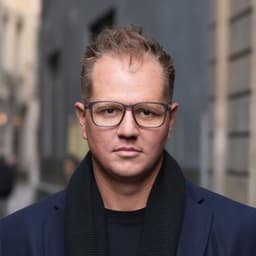
Stuart Leo
Stuart Leo founded Waymaker to solve a problem he kept seeing: businesses losing critical knowledge as they grow. He wrote Resolute to help leaders navigate change, lead with purpose, and build indestructible organizations. When he's not building software, he's enjoying the sand, surf, and open spaces of Australia.